



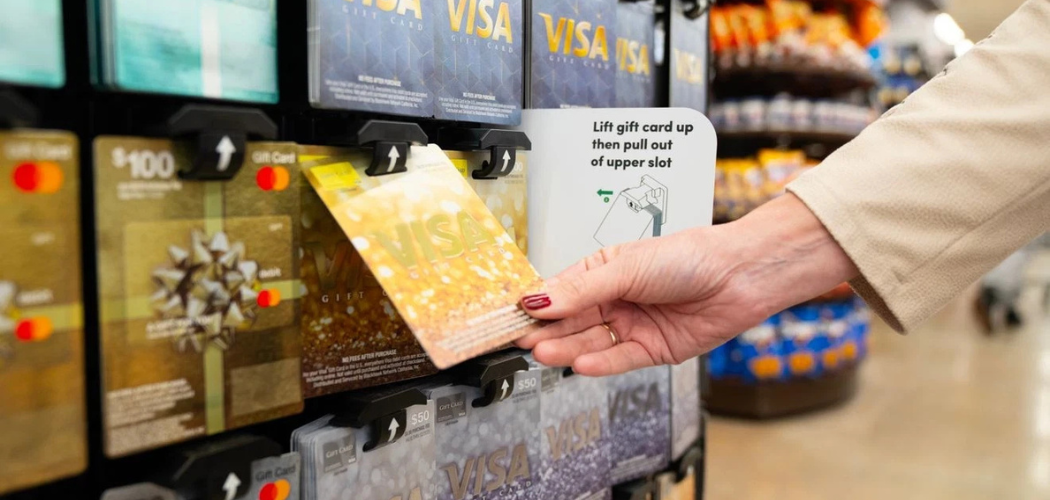

The gift card has long been filed under gifting: a December staple, a last-minute save. New consumer research from gift card platform Tillo suggests that view misses some important nuances about how consumers view and use their gift cards.
Its 2026 report, The Gift Card Opportunity, surveyed 3,081 adults across the US (2,059) and UK (1,022) through The Harris Poll. It found that self-purchase and rewards now account for much of the category’s commercial activity.
Self-purchase is the norm
79% of US and 74% of UK consumers have bought a brand gift card for themselves. The top reason, cited by 42% in both markets, is redeeming a reward or incentive. In other words, a loyalty program, employer, or bank put the card in the consumer’s hands. Promotions (38% US, 40% UK) and cashback (31%, 29%) come next.
Notably, 18% in both markets buy gift cards specifically to control their spending, and a quarter say they spend the card’s value and nothing more. For loyalty marketers, that makes the gift card less a present and more a budgeting and value-capture tool.
An acquisition channel someone else funds
Nine in ten respondents (89% US, 92% UK) say a gift card makes them more likely to try a brand for the first time. That figure holds steady across income brackets.
“Gift cards have traditionally been viewed as a gifting product or a way to reward existing customers, but our research suggests brands are overlooking a much bigger opportunity,” said Alex Preece, Tillo’s co-founder and CEO. “It’s time brands started thinking about gift cards beyond just a gifting channel and more squarely as a growth channel.”
Tillo argues that when the card arrives through a rewards catalog, recognition program, or cashback platform, the issuer pays for the introduction, not the brand. The behavioral data covers four outcomes:
- 44% (US) and 43% (UK) say the card captured spend they had already planned.
- 29% and 33% bought sooner because they had the card.
- 23% and 26% traded up to a premium item.
- 27% and 24% tried a brand for the first time.
Planned-spend capture rises with income, from 38% among US households earning under $50,000 to 49% among those earning over $100,000.
Beating cashback and coupons
Respondents were asked to choose between a gift card, cashback, or a coupon of equal value. 53% of US and 58% of UK adults chose the gift card. Cashback drew 33% and 29%, and coupons drew 13% in both markets.
Tillo attributes cashback’s weaker showing to clearing times of 60 to 90 days, a point it also raised in its 2025 study, From Gifting to Gaining. Bill Warshauer, Tillo’s chief revenue officer, framed it as a question of speed: “It’s not just about how much you’re giving someone, but how quickly they can enjoy it. Cashback that takes weeks to arrive or a coupon that requires another purchase puts conditions on something that is supposed to feel rewarding.”
Cashback remains a real competitor in the US, reaching 38% among men.
A brand halo, if the experience delivers
Simply offering gift cards lifts perception. 73% of US and 76% of UK consumers think better of brands that do, and 20% to 21% call those brands more trustworthy.
“That’s a powerful reminder that rewards are part of the brand experience and not just the cost of doing business,” Preece said. He cautioned that if the process is “slow, complicated or frustrating, brands can risk undermining the very connection and goodwill they’re trying to create.”
Distribution gaps
Consumers want to buy a brand’s gift cards through more than two channels on average: 2.34 in the US and 2.62 in the UK. Physical racks, brand stores, and brand websites lead, followed by loyalty programs at 36% and 38%. The report contends that most brands offer just one channel.
“There’s a disconnect between where consumers want to buy gift cards and where brands make them available,” Warshauer said. “If someone wants to engage with your brand, why make them work harder to do it?”
Parents stand out
Parents of children under 18 over-index on nearly every measure. 91% of US parents and 87% of UK parents self-purchase gift cards, compared with 74% and 66% of adults without children at home. Parents’ opinion of a brand also rises more when it offers gift cards: 84% and 87%, against 67% and 69%.
Big Takeaways
While the intent figures are directional, taken together the findings show gift cards doing three jobs at once: Rewarding existing customers, introducing new ones, and helping consumers manage what they spend.
For loyalty marketers, the practical move is to treat gift cards as part of reward and acquisition strategy, not a seasonal gifting product. Review where they sit in your reward catalog, and test whether instant-delivery rewards outperform cashback or coupons with your members.
The second step is distribution.
- Consumers want to buy and receive gift cards in more places than most brands offer, including through loyalty programs.
- Brands that widen those channels and keep redemption quick and simple are better placed to capture planned spend, earn first-time trials, and lift how customers see the brand.