





For many brands, leadership is killing it.
To paraphrase Mark Twain, the death of loyalty is somewhat of an exaggeration. There are more programs and points than ever and forecasts of continued growth. But loyalty is facing serious challenges, and AI is far from the solution.
The Challenges
Brand trust is eroding. Loyalty currencies and rewards —especially in travel but now even at Starbucks —have only declined in value, destroying trust. The result, according to PWC: 77% of consumers are retracting loyalty more quickly than three years ago.
The loyalty "sea of sameness" persists. Most strategies remain points-based and transactional, with 76% of consumers seeing no brand differentiation, up from 72% last year (VML Future 100, 2025, 2026). As Don Peppers wrote, "if you're doing what everyone else is doing, you're not building loyalty; you're just participating in a price war with different math." That math reduces profits. And it's exquisitely boring.
AI expectations diverge from reality. While agentic AI promises convenience, it risks making brands devoid of personality. Yet 91% of consumers "reward a brand for authenticity via purchases, investment, and advocacy" (Cohn & Wolfe). Authenticity drives brand loyalty.
Leaders are myopic. Some 90% of executives believe customers are more loyal; only 40% of consumers agree (PWC). That 50-point perception gap is the largest I've seen in 30+ years doing this kind of work. Consumers are less than half as loyal as executives think they are. Hello, disappointed investors.
CX isn't improving. Forrester's CX Index shows quality at an all-time low for two consecutive years. AI threatens to make CX more automated and algorithmic, less human, and emotional, further commoditizing the experience. In this case, transactional wins, but it’s a different kind of transactional. Thanks, Claude. (JK, I love Claude).
Uncertainty breeds risk aversion. Macroeconomic instability, geopolitical chaos, and political pressure make leaders default to discounts and performance marketing, reducing margins without building brands. There is no such thing as reward without risk. Or, as an agency head once said, “the safe way is a grocery store.”
The Opportunity is Black and White
Loyalty leadership is the most critical stuck point. These challenges require strategic direction from executives who connect customers and loyalty to business performance, KPIs, brand, insights, and competitive advantage. Loyalty and decision-making aren't easy, but leadership is the prerequisite to get loyalty unstuck.
Leadership must understand that loyalty isn't a program. Nor is it points, tiers, gamification, or rewards. Those are tactics and features. Loyalty is an outcome in the form of an emotional state: choosing a brand for reasons beyond price and convenience. Brands must show loyalty to customers and employees before they buy—by delivering better experiences that reinforce purchase decisions and fuel loyalty.
Leaders who get loyalty unstuck share common, simple traits, understanding that:
- Brands are the ultimate object of customer loyalty, and that loyalty means a customer will pay a premium or be willing to sacrifice time to do business with that brand.
- As Peter Drucker brilliantly clarified, "the purpose of a business is to create (and keep) a customer."
- It’s essential to establish customer-denominated metrics enterprise-wide, along with understanding, measuring and managing the connection between CX, loyalty, and profitability.
- Loyalty leadership requires obsession—internally and externally -- with customers.
- It’s a commitment; a journey, and not a program and fundamentally, part of a commercial strategy.
Companies like American Express, Apple and Costco, all strong brands with leadership committed to customers and delivering an excellent CX, are great examples. And their stock prices over the last 5 years, all significantly outperforming the S&P 500, reinforce the value of such a commitment.
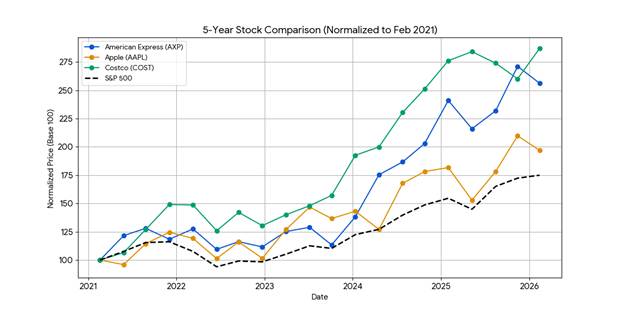
Loyalty leaders have higher margins, face less pricing pressure, enjoy more dependable (and predictable) ways to drive revenues, more loyal employees, and most importantly, higher enterprise valuations. Loyalty cannot be fully achieved with automation; it requires understanding and integration into the business, and that only comes from leadership making it a top priority.
Editor's Note

Phil Rubin , a charter CLMPTM with over 30 years of innovative work on customer loyalty, is the founder and CEO of Grey Space Matters (GSM). Prior to GSM, Phil founded rDialogue, an independent loyalty strategy and analytics firm serving leading global brands. Phil serves on several boards and is a sought-after speaker and mentor within the industry. He’s also a member of WMG’s Advisory Board.
A New Orleanian now living in Washington DC, beyond loyalty his passions are his family, photography, travel and running.