




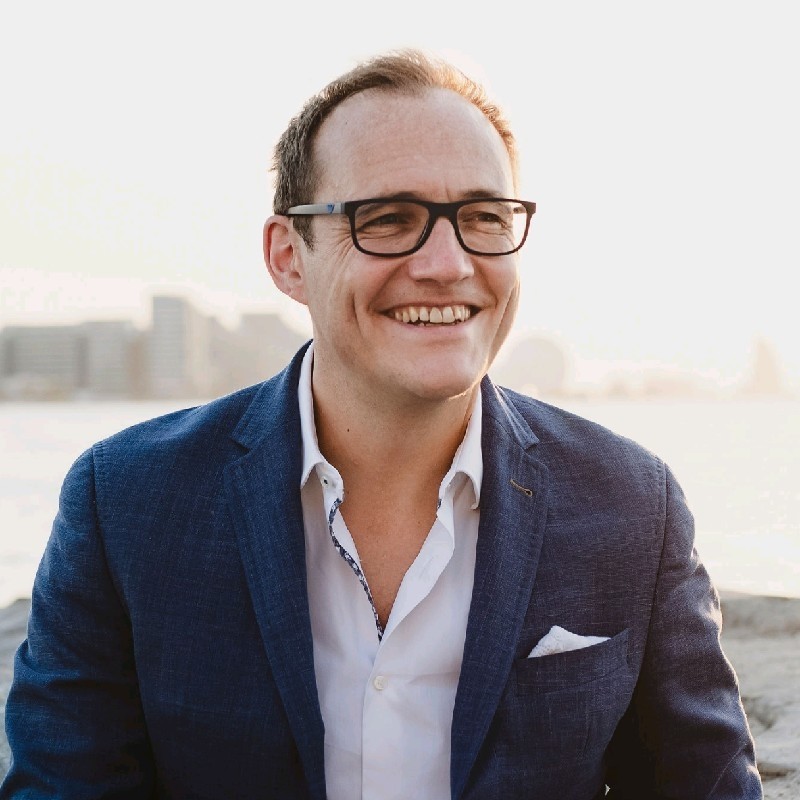
James Mulroney has focused on building loyalty models that succeed.
As he steps into the newly created role of Chief Customer Officer at CORA Loyalty, he's not talking about the company he joined so much as the problem he intends to solve. The challenge isn’t technology, it’s a client success problem.
“CORA’s growth and innovation are grounded in a deep commitment to customer success, something I’m incredibly passionate about,” Mulroney said of the move. “I look forward to partnering with our clients and our teams to deepen engagement, improve retention, and help brands build stronger connections with both customers and employees.”
Giving Attention to the Follow-Through
The word “retention” carries more weight coming from Mulroney than from most executives who use it. He spent recent years as Global Senior Vice President of loyalty technology's fastest growing SaaS platforms, running international teams responsible for renewals and expansion across a multi-million-dollar client portfolio.
Over this time, he earned a vantage point that informed this industry veteran exactly where loyalty programs succeed at the sale and struggle at the follow-through.
“It’s not about just rewarding customers for their transactional engagement,” Mulroney has said. “It’s about behavior and creating enduring and lasting relationships with customers.” Contrasting the role of transactions and relationships is the thread running through nearly thirty years of a career that has spanned Royal Bank of Canada, Microsoft, Digital 14, and the client-facing side of enterprise loyalty SaaS.
It also runs through a formative stretch leading strategic program delivery and business intelligence at Majid Al Futtaim, one of the largest retail and mixed-use conglomerates in the GCC region - a business that operates shopping malls, hypermarkets, entertainment venues, and hospitality brands under one roof.
Few environments make the case for connected loyalty more literally. A shopper's relationship with the retail group might touch a mall, a grocery run, a cinema visit, and a hotel stay in the same week, and the loyalty challenge is making all of it feel like one relationship rather than four disconnected ones. It's the same multi-brand, multi-touchpoint complexity that is reflected in the ecosystem-first thinking that Mulroney brings to CORA.
Across many client interactions, Mulroney has seen how often loyalty gets treated as a single component — a rewards engine bolted onto a card or an account — rather than a connected system built to compound value over time.
Describing the difference between product-specific loyalty and enterprise loyalty, Mulroney commented “What is the behavior architecture? Maybe a customer has multiple cards, or family with different cards or different types of accounts. That across a portfolio allows the institution to start making decisions they might not have considered if they were being very product specific.”
Connecting the ecosystem, not just the tech stack
At CORA Loyalty, Mulroney leads the company's global client organization, including client experience, business development, and marketing initiatives. He reports to CEO Beth McCoy, who has framed the mission around one goal: helping clients build loyalty programs that deliver “real, lasting value.”
Mulroney's version of that mandate centers on connection. CORA Loyalty's portfolio — a rewards marketplace, an enterprise loyalty management platform for points banking and earn-burn analytics, a channel and employee incentives capability and innovative payment technology — gives him four components that fit together in a powerful model.
“Loyalty is a specialization that a lot of businesses are waking up to, and it taps into a very human dynamic,” he has said. It’s a strategic approach that strikes the difference between a customer who feels an emotional connection to a brand and one who's simply processing transactions for a small discount.
His vision at CORA is to coalesce strategy, platforms, rewards, communications, fulfilment, and partners to work as one system, transcending the often-disconnected approach taken by many loyalty providers. Mulroney's read on fixing Loyalty’s “client success problem” is straightforward - tighten up the service level gap between what gets sold and what gets delivered on a sustainable basis.
Built to last, not just to launch
Another aspect of Mulroney's thesis is the time horizon for success. In his view, loyalty doesn’t reflect just a moment, it's a promise kept that has to be sustained and improved over time. This is particularly important as he seeks to understand how younger, digitally native audiences are changing the loyalty calculus. Many are less swayed by volume-based rewards and more attentive to transparency, trust, and relevance in the moment.
“It's less a numbers game the way we've traditionally thought about it,” he said. “It's much more to do with looking at the behavior of the younger generation — what they're finding relevant — and how the loyalty program taps into that emotional connection that will both engage and keep them engaged.”
That's the standard Mulroney is setting for himself in the CCO seat. He’s viewing client retention as a renewal metric, with member retention as the actual measure of whether a loyalty program is working. It's a subtle but deliberate shift in what “customer success” means inside a loyalty company. Success isn't a signed renewal, it's a program that keeps earning its place with the people it was built for.
Mulroney holds a PhD in Translation Studies and Linguistics from the University of Edinburgh and also studied Mathematics and Computer Science at the University of the West of England — an unusual pairing that shows up in how he talks about loyalty: as both a data and behavior-architecture problem, and a language and relevance problem.
Both halves of that background point at the same target inside CORA Loyalty's next phase of growth - an industry that Mulroney believes has spent too long optimizing for the deal and is finally ready to optimize for what happens after it.