



Members are judging programmes by what they can use now. The next decade belongs to programmes that combine utility with emotional relevance.
Starbucks restructured its rewards programme in March. American Airlines stripped points from basic economy in December. Best Buy locked points behind its own credit card. Three of the biggest programmes in retail rewrote their rules in three months. They took value back from members and called it modernisation.
My conclusion from all this activity? Loyalty has entered the Utility Phase.
Antavo’s 2026 data shows 82.6% of marketers believe their programmes make customers feel valued. Only 56.2% of customers agree. The 26-point gap is not a rounding error. It is a structural gap between what the industry thinks it is delivering and what consumers experience.
The economics explain why: at a 1% earn rate, a member needs to spend $2,500 a year with a single brand to accumulate $25 in annual loyalty value. A coffee and a sandwich.
The reward for a year of brand fidelity? Outside grocery and fuel, only 10 to 20% of customers spend enough to get there.
The majority of enrolled members are, by design, accumulating balances too small to redeem meaningfully. They watch points expire or ignore them. Hilton Honors raised the standard room redemption cap from 150,000 to 250,000 points in 2025, a 67% devaluation in 12 months.
Antavo confirms the pattern: 27% of points earned in 2025 went unspent, and 12% expired in programmes that use expiration rules. The industry has spent decades measuring enrolment and calling it success. Enrolment is not success. The felt value is success.
The Wise Marketer surfaced a telling signal from a study of quick-service restaurants: 85% of loyalty members said it is “all about saving money, not VIP perks.” That reads as a preference shift. It is a usability statement. Consumers are not abandoning aspiration. They are abandoning programmes that make aspiration inaccessible. What they vote for, by behaviour, is value they can reach.
The redemption data confirms the direction. Research from The Wise Marketer and Engage People found 79% of respondents used Pay with Points at checkout, in-store or online, up from 37% in 2023. And 96% said it matters that they can choose when and whether to redeem.
Consumers are not rejecting rewards. They are rejecting rewards that are hard to use. The Utility Phase is not about lowering ambition. It is about closing the distance between participation and felt reward.
The Utility Phase will not be carried by QSR discounts alone. QSR is the early signal: immediate, practical, easy to understand. The category positioned for the next decade is digital entertainment. Not because it is a trend. Because it already lives inside how younger consumers spend their time every day.
Gen Z averages 6.9 hours a day with media and entertainment. Millennials pass almost as much screen time at 6.3 hours. That time is not dominated by one legacy medium. It is distributed across social media, streaming video, gaming, music, and user-generated content, with social media, UGC, gaming, and music accounting for roughly 4.5 hours a day. Two-thirds of total media-and-entertainment time. This is not screen time in the abstract. This is daily identity.
83% of U.S. adults watch streaming services while only 36% still subscribe to cable or satellite. This number is even lower, falling to 16% among those aged 18 to 29. Nielsen reported streaming reached 44.8% of total TV usage in May 2025, overtaking broadcast and cable combined for the first time. Gaming is not a subculture: 190.6 million Americans play video and mobile games, with 61% of the U.S. population gaming at least an hour a week.
Digital entertainment is not adjacent to daily life. It is daily life.
It works at low economic thresholds. Entry points begin at $0.29 on Roblox. Subscription utility starts in the low single digits: Nintendo Switch Online at $3.99 a month, Spotify Student at $6.99, Netflix Standard with ads at $7.99. These are not premium redemption tiers. They are accessible, recognisable, and current. A member who will never accumulate enough balance for a flight upgrade can still reach a sub-dollar in-game purchase, a month of gaming access, or a streaming subscription. The threshold problem that breaks traditional loyalty economics does not exist here.
The Utility Phase is real, and the industry needs to take it seriously. Utility alone is a race to the bottom. The programmes that win the next decade will not deliver the cheapest reward. They will deliver the most effective blend of affordability, frequency, and felt relevance. Digital entertainment sits at that intersection in a way that few categories match. A month of streaming or gaming is not just consumption. For digital natives, it is identity.
A loyalty programme that offers digital entertainment as a redemption category is not adding a new SKU to its catalogue. It is connecting its currency to something members already care about, daily, repeatedly, and by choice. That is a fundamentally different proposition than accumulating toward a distant aspirational reward that most members will never reach. It turns low-threshold rewards into participation in the parts of life that already matter.
The loyalty industry has spent years trying to manufacture emotional engagement through status tiers, surprise-and-delight mechanics, and elaborate programme architectures. Some of it has worked. Most of it has reached the same 10 to 20% of high-spending members it always reached, while the broader base remained under-rewarded and unmoved.
The Utility Phase is the market correcting for that. The emotional opportunity is what comes next for the programmes willing to look beyond the traditional redemption catalogue. The goal is not stored value. It is felt value. The Utility Phase has begun. The programmes that carry it furthest will be the ones that make their currency convertible into the parts of life consumers already live inside.
About the Author

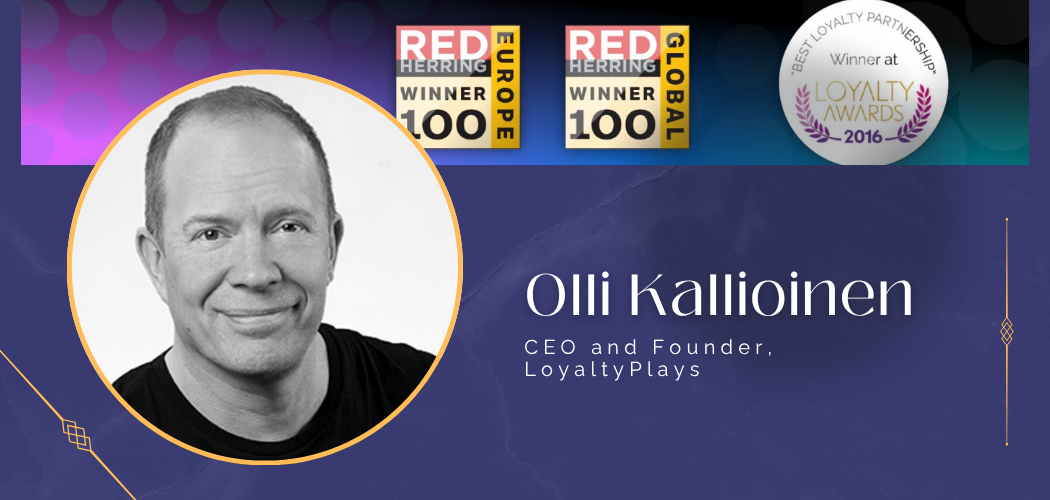
Olli Kallioinen is CEO and Founder of LoyaltyPlays, builder of the anyplay co-branded card. Over twenty years he has built platforms connecting loyalty, payments, and digital entertainment, including the world’s first premium digital entertainment redemption platform, serving 50 million members. Red Herring Global Top 100 and Loyalty Awards Best Partnership recipient.