


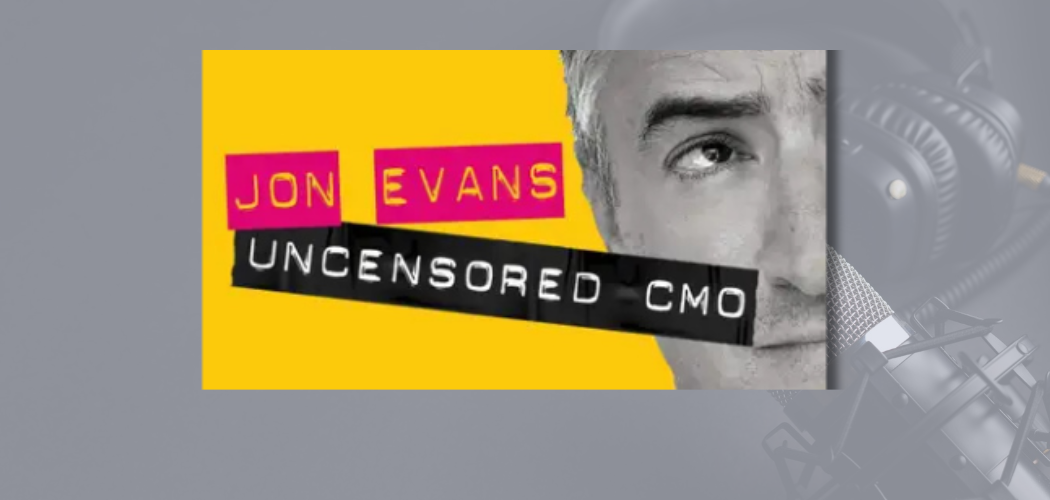

Marketing leaders have gone from bystanders to decision-makers on AI, but most have yet to do the hard work of transformation. That was the central message of a recent Uncensored CMO podcast episode recorded at Cannes.
Host Jon Evans spoke with Elke Karskens, then Head of International Marketing at OpenAI and now its Managing Director for the UK, Ireland and Northern Europe, and Mark Abraham, Managing Director and Senior Partner at Boston Consulting Group (BCG), where he leads the global Marketing, Sales and Pricing practice.
CMOs in the driver’s seat
Abraham cited BCG’s latest survey of about 300 CMOs. For the first time, more than half say they own AI investment decisions for their function. The average CMO now spends upwards of $15 million on AI tools, on top of existing martech. “With great power comes great responsibility,” he noted, as expectations for ROI climb.
He also described an “illusion of transformation.” Nearly every CMO says AI is reshaping key parts of marketing, but the change is broad rather than deep. Only about a third have rewired their organizations, upskilled their teams and built an agentic tech stack. About 8% run autonomous end-to-end campaigns for certain content and channels. Measurable growth gains from tools like ChatGPT are reported by 30% of B2C CMOs and 20% of B2B CMOs.
Judgment still belongs to humans
Karskens argued that the most valuable marketing skills in an AI world are judgment, context, taste and point of view. Marketers can now go from idea to concept in hours, she said, but AI doesn’t decide the right message.
She described a personal “chief of staff” built with Codex. Every three hours it scans her Slack and email, flags what needs a response and drafts replies.
A new ad channel built on intent
OpenAI’s ads platform, launched earlier this year, is live in seven markets: the US, Canada, the UK, Australia, New Zealand, Japan and Korea. Brazil and Mexico are coming next. Karskens said users describe in their own words what they want to solve, which signals higher intent than attention-driven media does.
Ads are clearly labeled and sit outside answers, and conversations are not shared with advertisers. The platform has moved from CPM pricing to a CPC auction. Abraham predicted that LLM advertising could eclipse retail media, which he put at about $150 billion.
On earning AI recommendations, Karskens’ advice was not to try to game the system but to be genuinely useful. Abraham added that owned content and new measurement approaches matter more than ever.
The brand intelligence layer
Abraham’s sharpest warning was that putting agents on top of your data is not enough. Companies will compete on how their best marketers work, codified into a “brand intelligence layer” of guardrails, KPIs and quality checks.
Brands that fail to close the gap risk losing share to agent-native challengers, a trend he said is already visible in beauty and apparel.
Both guests urged reinvesting efficiency savings into growth. When leading CMOs face cost targets, they are funding new tools, roles and upskilling rather than simply cutting another 10%.
The loyalty takeaway
The lesson for loyalty marketers is clear. High-intent conversational channels, codified brand knowledge and a disciplined approach to trust will shape how programs reach and keep members.
CMOs who treat AI as an operating layer, not just a tool, will be best placed to turn efficiency into growth.