




Wise Marketer and Ethan Gustav, Group President of North America at Infobip, discuss how airlines can create stronger customer relationships through real-time communications
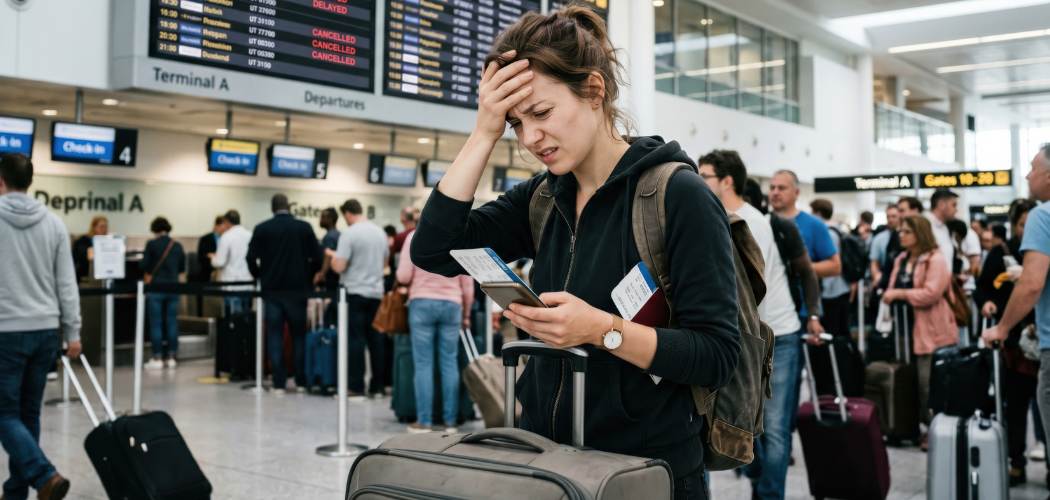
As peak travel season ramps up and passenger volumes hold above pre-pandemic levels, airlines face a widening gap between what travelers expect and what most communication systems can deliver. When a gate changes, a flight is delayed, or a connection is at risk, customers don't wait patiently for an overhead announcement anymore — they expect to know immediately, on the channel they're already using, and to be able to respond just as fast.
That gap has a real cost: airlines lose an estimated $1.4 billion in annual revenue by failing to improve customer service, according to a CMSWire analysis.
There's no single fix for travel-day stress, but one lever is proving its worth again and again: real-time, omnichannel communication that turns disruption into a moment that builds brand loyalty rather than erodes it. Global communications platform Infobip has built its airline practice around exactly that premise, powering personalized, two-way messaging journeys for carriers including Virgin Atlantic and Cebu Pacific.
To explore how airlines can put this strategy into practice, The Wise Marketer conducted a virtual interview with Ethan Gustav, Group President of North America at Infobip. The conversation covers:
- How mobile-first, two-way messaging delivers urgent itinerary updates, automates check-ins, and supports more personalized booking assistance
- Why leading airlines are shifting from reactive problem-solving to proactive, always-on support across every channel travelers use
- A real-world result: Infobip's WhatsApp deployment with Virgin Atlantic lifted online check-in rates by 11% at Heathrow
Wise Marketer (WM): What does Infobip's work with airlines look like in practice, and how does it improve the handling of urgent flight and itinerary changes?
Infobip: We work with global airlines like Cebu Pacific and Virgin Atlantic, along with adjacent companies such as Airport AI, to build digital-first experiences that match today's traveler expectations — removing friction from the journey while streamlining airport operations in the process.
With Virgin Atlantic, for example, we deployed a WhatsApp messaging solution that lifted check-in rates for passengers departing London Heathrow by 11%. Travelers receive a WhatsApp message with a direct link to check in via the website or mobile app before they arrive at the airport, with an automated failover to SMS for anyone who can't be reached on the app. That pre-arrival check-in boost has reduced desk congestion and wait times. After check-in, travelers get key flight details — terminal, zone, and more — directly through WhatsApp, the app most already use every day.
WM: What does a mobile-first, two-way communication strategy look like for airlines, and what problems does it solve for travelers?
Infobip: It means real-time, personalized engagement through the messaging platforms people already rely on — RCS, WhatsApp, Apple Messages. Critical information like gate changes and updated boarding times reaches travelers immediately on their preferred channel, and two-way conversation lets them respond instantly for rebooking, support, or other requests.
In a digital-first world, that combination of accessibility, urgency, and responsiveness gives travelers more control over their own itineraries — and makes them more likely to book with that airline again.
WM: How do automation and omnichannel strategies work together to improve the customer experience?
Infobip: Automation and omnichannel each solve a different problem, and the combination is what makes the experience work. Automation provides the fail-safes and urgent delivery — falling back to SMS when a customer is unreachable on WhatsApp, or pushing automated flight updates the moment something changes. Omnichannel ensures that reach extends across every platform passengers actually use, so the experience feels consistent and fluid at every touchpoint. Together, they produce journeys that are more cohesive, personalized, and efficient.
WM: How does this approach translate into more personalized booking support and proactive service?
Infobip: Reaching travelers on their preferred platform is only the first step. Two-way conversation lets passengers adjust itineraries on the fly and request more nuanced help — from restaurant recommendations at the airport to personalized offers — while giving airlines the data to anticipate needs rather than just react to them.
On the airline side, tools like AI chatbots make that shift possible at scale: fostering a conversational, human tone while handling routine questions, flagging potential disruptions early, and freeing human agents to focus on more complex cases. The 11% check-in lift we saw with Virgin Atlantic is one proof point — and a signal of the appetite for extending these services well past the moment passengers reach the airport.
WM: What's driving airlines and the broader travel industry to rethink their customer communications strategy, and what technologies are emerging as a result?
Infobip: We're living in an era of hyper-digitalization, where instant gratification feels normal. Customers want real-time engagement, always-on support, and frictionless interactions — and with passenger volumes back above pre-COVID levels, tolerance for uncertainty is lower than ever.
Airline passenger experience is catching up to other industries already deep into digital transformation, which means unifying data, channels, and operational systems so communication becomes proactive rather than reactive. That's the real driver behind omnichannel's rising value: getting the right message to the right traveler on the right platform at the right time, while continuing to adopt and refine AI chatbots and agents.
WM: What immediate steps should airlines take to level up their digital communications strategy?
Infobip: Airlines need to go beyond simply being able to hold a conversation on every platform — that starts with getting marketing, operations, IT, and customer service aligned on which messages go where. Critical alerts belong on SMS and app push notifications; real-time support fits WhatsApp and AI chatbots (as we've seen with Virgin Atlantic); more detailed, less time-sensitive information can live in email.
From there, teams need to put customer interaction data to work — informing future queries, personalizing support, and building long-term loyalty. That can mean sending check-in reminders at the right hour based on time zone, recommending destinations from search history, or offering lounge access to premium passengers. And airlines need a failover plan for disruptions since SMS doesn't require an internet connection and can reach travelers even in remote areas.
Get these pieces right, and airlines can sustain two-way conversations with full passenger context — delivering timely support, staying engaged after the trip ends, and building the kind of loyalty that keeps travelers coming back.
WM: What's next for digital customer experience in the airline industry?
Infobip: The industry is moving from reactive to proactive support, with agentic AI leading that shift. Simple chatbots built to answer basic FAQs are evolving into autonomous assistants that can act on a passenger's behalf — proactively flagging weather or technical disruptions, rebooking based on preference and availability, and triaging communications to ease the load on contact centers.
That points toward a future that's increasingly agent-to-agent: airline AI assistants working directly with travelers' personal AI assistants. As both businesses and individuals mature in how they use AI, we'll see that translate into smoother operations and more frictionless journeys for passengers.