



Panera, Microsoft, United and the Cleveland Cavaliers show how loyalty is moving from the point of sale into the full customer journey
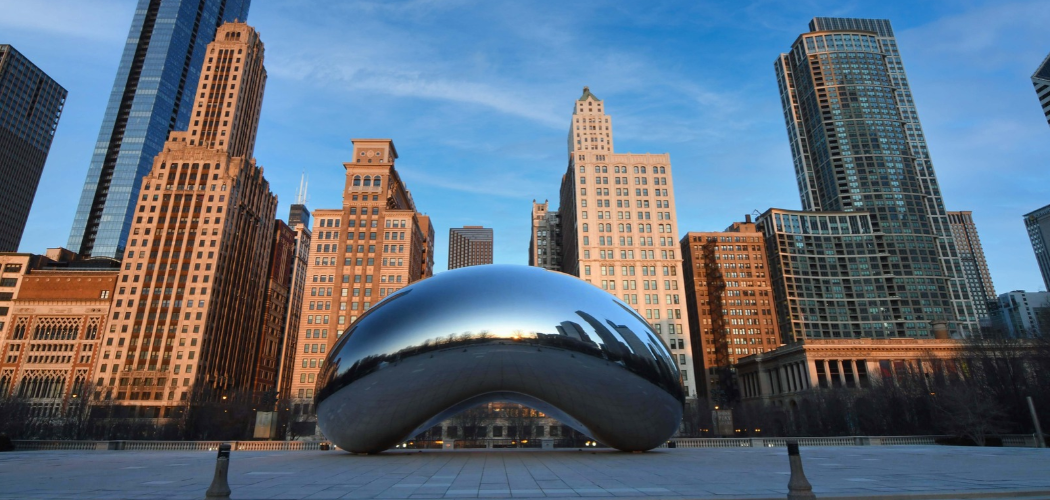
Across nine sessions and a room of 70+ brand-side practitioners at TBH Loyalty™ Chicago, one idea kept coming up: the customer's journey, not the transaction, is now the focus of loyalty, from before the payment clears to the time between visits.
If TBH Loyalty™ Toronto earlier this year was about partnership, Chicago was about something harder to put into practice: managing loyalty across the customer's entire journey, not just at the point of purchase or inside the program. Three brands showed what that looks like:
- Panera Bread rebuilt a 70-million-member program around transparency and member control.
- Microsoft rewired its CRM architecture to follow the customer's next logical action, not the company's next product launch.
- The Cleveland Cavaliers are figuring out how to make the 99% of fans who never set foot in the arena feel part of the team's story.
During the event, TBH published the inaugural Inside Loyalty Report 2026 through NALA, a practitioner survey comparing what loyalty professionals believe with what their organizations measure.
Its tagline, "for practitioners by practitioners," is the same one The Wise Marketer and the Loyalty Academy™ have used for well over a decade to describe the CLMP™ designation: education built by the industry, for the industry.
Rebuilding the Relationship, Not Just the Program
The day opened with a fireside chat featuring Panera Bread and Braze. After 14 to 15 years, MyPanera had grown without evolving: a lack of transparency, diminishing surprise and delight, and over 50% of customers visiting too rarely to experience the program at all.
The team rebuilt it from scratch. Research pointed to two pillars, value and transparency, and the redesign gave members more control. Every dollar now goes farther, and the structure is cleaner: a free MyPanera tier; a MyPanera+ tier, also free, unlocked by spending $300 in a calendar year; and the paid MyPanera+ Sip Club subscription ($14.99 per month or $119.99 per year), which grants MyPanera+ perks immediately plus up to 30 self-service drinks a month.
Associates now see a customer's loyalty tier on the ordering screen and use messaging consistent with what members experience digitally. MyPanera Mondays, a free bakery treat on a fixed day, has driven measurable one-day lift because it replaced confusion with clarity.
The Microsoft and Bond Brand Loyalty session brought a different scale to the same challenge. Bond shared its Personalization Maturity Framework (Foundational, Developing, Proficient, Advanced, Leading) with a sobering data point: no one is at Leading, and fewer than 1% are at Advanced.
Danielle Yedinak at Microsoft is rebuilding how the organization sequences customer communications. Instead of each product team speaking to customers from its own perspective, her team built an "Editor in Chief" program that controls the cadence and content reaching any given customer.
Microsoft has also commissioned independent journalists to tell customer stories about what customers can do with Microsoft, and uses a synthetic testing panel of AI-driven customer archetypes to pressure-test messaging before it ships. The lesson from both sessions: loyalty now spans the entire brand experience, well beyond any formal program.
High Frequency, High Feeling — and the Space Between
A quasi-debate between Great Wolf Lodge and Ahold Delhaize USA, moderated by Sky Zone's Chief Commercial Officer, took on emotional loyalty across very different frequency environments. Dave Van Saun from Great Wolf Lodge anchored his thinking in "bringing joy to families," even for guests who visit only once or twice a year. Emily Mikus from Ahold Delhaize countered that saving money can be deeply emotional for a family on a budget, though fifty-two visits a year also means fifty-two chances to be forgettable.
The best line of the session: you may go to buy flour, but the purpose is to bake cookies, and cookies are how you bring joy to someone. The role of loyalty is to connect the what to the why, without needing to take credit for the moment.
Great Wolf's goal is simple: get a lapsed guest to come back one more time. The data shows that guests who return once are likely to return again, and newsletters, app push notifications and anniversary-triggered communications make that possible.
Loyalty Must Act Before the Payment
Picking up from his talk at TBH Toronto, Len Covello from Engage People made the case for real-time loyalty: "Loyalty must act before the payment, not after the transaction. After the transaction, the opportunity to influence the decision has passed." He framed the new expectation stack as Card = identity. Payment = decision point. Loyalty = financial instrument.
His SAVE Framework (Surface value, Activate personalization in context, Verify value instantly, Enable everyday across categories) describes what that pre-payment moment must do. Seeing your points credited within 30 minutes of flying is now table stakes, so why isn't real-time yet the standard? Technology is a solvable barrier, and programs waiting for perfect infrastructure are ceding the decision point to competitors who aren't waiting.
Partnership as a Profit Center, Not a Cost Line
Kevin Butler from United MileagePlus brought the most structured commercial framework of the day, a partnership model built on four pillars: partner selection around mutual strengths, customer behavior loop design, execution operating model, and economics. His definition of loyalty's purpose is one I'll be repeating: "Make the next valuable action happen."
MileagePlus manages partner relationships as a profit center: Partner Currency Revenue minus Reward and Redemption Cost minus Operating Cost equals Contribution. Butler was candid that while API integration is the aspiration, batch processing done well can still meet member expectations. Consistency and predictability matter more than speed, as does understanding your partner's customer journey before you assume you know how to show up in it.
Extending the Journey to the 99%
The Cleveland Cavaliers and Blings.io session was one of the most creative of the day. By their estimate, 99% of fans are never in the arena. The Cavaliers reach them with personalized interactive video, turning a dry season-ticket renewal notice into an individualized "year in review" that ties each member's attendance to the team's success.
Showing someone the moments they were in the building, and connecting their presence to what happened on the court, creates an emotional claim rather than a commercial one. The same approach is being applied to surveys that feel like brand experiences and to cultural moments like Marvel nights.
The lesson applies well beyond sports: if you use customer data only to trigger batch offers, you're leaving most of the journey unaddressed.
Build for the Program You Want to Become
Laura O'Connor's session on RaceTrac's five-year tech stack overhaul was valuable for anyone who has inherited a home-grown loyalty platform and wondered where to begin.
RaceTrac went through two full loyalty platform migrations in six years. The headline lesson: "New tech won't fix a broken foundation." The data, processes and team have to be ready first. "Always on" means designing for when the connection isn't, knowing which experiences must hold regardless of system state.
Treat data quality as guest experience: members don't care which part of your process is broken, only that their trust was betrayed. Her closing principle: "Your loyalty strategy could eventually be limited by whatever you failed to imagine."
Fandom Isn't the Finish Line
Katie Dalton, President of Audience Rewards, the only loyalty program dedicated to Broadway and owned by the major theatre producers, closed the event. As Bill Hanifin explored with her in a recent interview for The Wise Marketer, Dalton's work rests on the conviction that fandom is not the destination but the beginning.
Broadway audiences return, recruit and advocate in ways most consumer programs spend heavily to manufacture. Audience Rewards focuses on identifying that passionate core and designing the journey so that going to a show becomes a practice rather than an event.
That idea of loyalty as a practice, not a reward for a transaction, tied the day together. The journey continues between visits, and the brands that earn a place in that space will build loyalty that lasts.
Key Signals from the Day
- Personalization maturity is rare: Bond Brand Loyalty's framework puts fewer than 1% of organizations at an advanced level.
- Real-time loyalty value is now a consumer expectation, not a differentiator.
- Epsilon reminded the room that the best loyalty is an ongoing conversation with the individual customer, inside and outside the formal program. Siloed data is not a CFO problem; it's a loyalty strategy problem.
- 41% of consumers say a brand's ability to anticipate their needs would make them more loyal (Braze). Anticipation requires knowing where the customer is going, not just where they've been.
Final Thoughts
If the journey now defines loyalty, what does that mean for how we measure it?
Most programs still run on transactional KPIs: visits, points issued, redemption rates. The Inside Loyalty Report found that 85% of practitioners say trust and relevance matter most, yet 50% are still optimizing for purchase frequency. That gap between belief and practice is a decision-making problem, not a data problem.
The brands at TBH Chicago closing that gap are designing for the customer's full journey, from the moments before the visit to the time between them.
TBH Loyalty™ Chicago is produced by Hadie Perkas and Costas Perkas, co-founders of the European Loyalty Association™ and the North American Loyalty Association™, alongside Lia Grimberg, NALA's Chief Engagement and Growth Officer.
Aaron Dauphinee is the Chief Marketing Officer at Wise Marketer Group, publishers of The Wise Marketer™ and home of the Loyalty Academy™ and the industry's first educational designation the Certified Loyalty Marketing Professional™ (CLMP™).